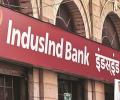
Banks enjoyed an expansion in Net Interest Margins (or NIMs) as well as in credit demand through the 2022-23 financial year (FY23). The credit expansion was because economic growth continued to recover from the Covid-19 years, and indeed, second half GDP growth surprised on the upside. The NIM expansion was because banks raised lending rates immediately (in many cases automatically due to floaters) as the Reserve Bank of India (RBI) hiked policy rates, and only started raising deposit rates late into the fiscal.
HDFC Bank Q1FY24 results analysis: Shares of HDFC Bank, the world's seventh largest financial entity, have advanced 2 per cent in two days, as against 1 per cent rise in the benchmark S&P BSE Sensex, after the lender reported its April-June quarter (Q1) results for financial year 2023-24 (FY24) on July 17. The S&P BSE Bankex index, meanwhile, has gained 1.3 per cent. While the near-term stock performance may remain sideways due to merger-related hiccups, analysts remain bullish on the stock's long-term prospects.
Unlike mutual funds, an ETF trades like a common stock.

'This was earlier driven by industries and the commercial sector.'

Cheque payments will be safer; the limit for contactless card transactions hiked.

Major shareholder Kinnevik, a Swedish investment firm, devalued Quikr by 45%, referring to the exaggerated revenue resulting from fraudulent transactions that rocked the company. Quikr is now valued at about $577 million.

'Investors should allocate about 5% to 10% to such funds.'

'We have filed our draft red herring prospectus for a floating IPO for a net offer size of 86.6 million shares.'

The gains from investing in direct plans can be higher than the difference in expense ratios.

There was an acceptable domestic performance in India but there continues to be concerns about the Europe business and that overshadows the local performance. The consolidated revenues for the Q2FY24 stood at Rs 55,682 crore with an operating profit of Rs 4,315 crore and an operating profit margin of 8 per cent.

Investors were stuck in old schemes though they were suspended because of tax implications.

However, the road to profitability has already hit some hurdles for the Delhi-based bank as the Union government has rejected its demand for an additional capital infusion of around Rs 8,000 crore in 2018-19

Amit Shah's net worth grew 32 per cent to Rs 37.91 crore, mainly due to 80 per cent appreciation in the market value of his securities.

Data on the real value of the currency against other currencies tells a different story.

IDFC First Bank delivered good results in the first quarter of this financial year (Q1FY24), but some analysts are concerned the bank is fully-valued. So, there has been profit-booking after a price rise. Growth went side-by-side with a focus on cutting interest costs and exposure to high non-performing infrastructure loans. The mortgage book is 28 per cent, of which 24 per cent is home loans and loans against property.

'...which is possible through flexicap and multicap funds.' 'The latter has a better balance between large, mid and smallcap stocks.'
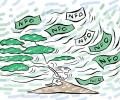
The number of equity schemes rose to 562 from 519 two years ago. Equity NFOs, in fact, have mopped up more than Rs 16,000 crore since 2018 - 2.7 times the Rs 5,948 crore collected in the preceding three calendar years.

The deal includes Reliance Infrastructure's integrated business of Generation, Transmission and Retail Electricity Distribution

Navi Mutual Fund (MF), among the latest entrants in the Rs 35-trillion industry, is looking to make a mark in the passive investment space, which is gaining traction in the country. The Flipkart co-founder Sachin Bansal-led fund house filed seven offer documents with the market regulator Securities and Exchange Board of India (Sebi) on a single day this week. Some of the schemes Navi MF plans to launch are Navi NASDAQ 100 Fund of Fund, Navi Nifty Commodities Index Fund, Navi Nifty 100 ESG Index Fund.
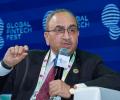
'We have a plan to plough back a 'This year in the first half we had profits of more than Rs 31,000 crore.' significant amount of profits this financial year.' 'We have seen this organic plough back of profit is one of best ways to support the equity of the bank.'

'Global investors expect the rupee to be more vulnerable in the downturns in the future than ever before,' notes Apoorva Javadekar.

Bankers said as part of its debt reduction plan, Canada's Brookfield-sponsored India Infrastructure Trust acquired a pipeline for Rs 13,000 crore from East West Pipeline Ltd, an arm of Reliance Industries Holding Private Ltd, and all the liabilities are now off the subsidiary's books.

The country's largest lender SBI on Friday reported a 41 per cent surge in standalone net profit at Rs 9,114 crore for the fourth quarter ended March 2022, helped by decline in bad loans. State Bank of India (SBI) had registered a profit of Rs 6,451 crore during January-March period of 2020-21, the lender said in a regulatory filing. Total income of the bank during the March quarter increased marginally to Rs 82,613 crore, from Rs 81,327 crore in the same period of the previous fiscal.

Investing the time and resources needed to acquire new skill sets and sharpen existing ones will enable you to stay relevant and make you more employable, says Ankit Aggarwal, founder and CEO of Unstop.

Every defaulter is not a wilful defaulter who has the capability of paying back and is yet not servicing the bank loan, observes Tamal Bandyopadhyay.
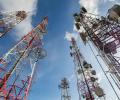
The government expects to realise Rs 35,100 crore from the partial sale of Bharatnet fibre assets and around 13,500 mobile towers owned by state-run telecom firms as part of its national monetisation pipeline released on Monday. Government think tank Niti Aayog has valued over 2.86 lakh kilometre of optical fibre assets laid by BBNL and BSNL under rural broadband project Bharatnet at Rs 26,300 crore, according to the National Monetisation Pipeline (NMP) document. According to the document, BSNL's 13,567 mobile tower assets and MTNL's 1,350 towers have been valued at Rs 8,800 crore.

India's equity markets are on a roller-coaster ride, after delivering spectacular returns for two consecutive years - in 2020 and 2021. The benchmark National Stock Exchange's (NSE's) Nifty50 is down 1.5 per cent in the first nine months of the current calendar year 2022 (CY22) as foreign portfolio investors sold Indian stocks due to rising bond yields in the US and across global markets, including India. The sell-off in the Indian equity markets has, however, not been broad-based and largely limited to sectors facing earnings headwinds from rising interest rates, lower commodity and energy prices, and likely economic recession in advanced economies.

Banks, the biggest component of the Indian equity market, are now trading at a big discount to the benchmark indicesThe BSE Bankex index, which tracks the share price of the 10 top listed banks, is trading at a trailing price to earnings (P/E) multiple of 15.3X, nearly a 40 per cent discount to the BSE Sensex current P/E of 24.37X. This is the biggest valuation gap between the two indices in at least 10 years. Similarly, the BSE Bankex price to book ratio (P/B) of 2.22X is 40 per cent lower than the current Sensex P/B ratio of 3.61X.
With a 'yes' vote, there is a more foreseeable outcome, while a 'no' could result in greater uncertainty, for which retail investors may not have the appetite.

rediffGURU Vivek Lala answers your income tax and personal finance queries.

Titan's October-December quarter (Q3) business update claims 22-23 per cent revenue growth in the standalone jewellery sales (excluding bullion sales), implying a 4-year compound annual growth rate (CAGR) of 21.3 per cent. Store additions also looked healthy, with 21 new Tanishq stores opened in Q3, taking the total count to 466 (+43 in 9 months of FY24) including two in the US and one in Singapore. Titan added 90 stores in Q3, pushing its total retail outlets to 2,949 (including CaratLane).

Polarisation and the increase in index weight of a few a stocks have weighed on performance. The worst performers include Nippon India Large Cap and HDFC Top 100 (2.6 per cent).

The recovering valuations, will lead to enhanced optimism among investors about funding startups.
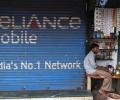
Telecom major Reliance Communications plans to monetise its real estate assets as it looks to pare debt.

Reliance Retail's shareholders will get one share of its listed parent, Reliance Industries, in exchange for every four shares, according to the scheme of arrangement.

When Life Insurance Corporation (LIC) of India gets listed on the bourses next month, it will be among the biggest listed life insurers globally in terms of market capitalisation (m-cap), assets, and revenue, but will also be among the least profitable and capitalised among its peer group. A big gap between LIC's m-cap, profits, and networth (shareholder capital) will make it one of the priciest insurers globally, in terms of price-to-earnings (P/E) multiple and price-to-book value (P/B) ratio. LIC also lags behind its Indian listed peers in terms of profit and networth.

Thanks to a $5.7 billion deal with Facebook, a Rs 53,125 crore rights issue and more stake sale to companies such as Saudi Aramco, the target is likely to be achieved by December.

In a significant move, markets watchdog Sebi on Tuesday decided to implement the requirement to separate the positions of chairperson and managing director at listed companies on a voluntary basis and not make it mandatory for now. The development also comes against the backdrop of Finance Minister Nirmala Sitharaman recently saying the regulator should hear if Indian companies have a view on the matter even as she made it clear that she was not "giving a diktat". The top-500 listed entities were required to split the roles of chairperson and managing director/chief executive officer before the April 2022 deadline.

The queries, sent in November, were mainly about Capital Investment Trust, which the I-T department said, was used for the purpose of transferring foreign funds comprising global depository receipts (GDRs) of the value of $400 million to two Indian entities - Reliance Utilities & Power (RUPL) and Reliance Port & Terminal (RPTL), owned by the Ambani family. A show-cause notice issued on March 29 to Ambani's wife Nita, and their three children.

Fund managers are withdrawing after a two-year long run in public sector bank (PSB) stocks. Domestic mutual funds (MFs) were net sellers of PSB stocks for the first time in nine quarters, offloading shares worth Rs 1,800 crore in the March quarter, said a report by ICICI Securities. In the previous eight quarters, fund houses had invested more than Rs 10,000 in PSBs amid deep discounts in valuation vis--vis their private sector peers.
 © 2026 Rediff.com - Advertise with us - Disclaimer - Privacy Policy - Sitemap - Feedback - About us - Terms of use - Grievances